Growth is a double edged sword. Unchecked, growth can be cancerous and destructive. It is this type of ceaseless expansion that has put our society into the precarious environmental and financial positions in which we currently find ourselves. On the other hand, growth can be regenerative and life-giving. Following a forest fire or a bitter winter, the first green shoots to emerge from the earth bear witness to the earth's ability to restore life in the wake of disaster.

My goal for this blog is pretty simple and open-ended: I want to document and share with family and friends my efforts to incorporate an ever increasing degree of self sufficiency, voluntary simplicity, and environmentally-conscious design into my life as a would be urban homesteader.


Showing posts with label Food. Show all posts

Tuesday, July 3, 2012

Homesteading with kids

 Alex helps mow the grass

Tater helps plant pepper seedlings

One of the best parts about trying to live a more self-sufficient lifestyle is having the opportunity to pass on important lessons and skills to your kids. Resourcefulness, thriftiness, compassion, and the ability to think critically are all things that children gain from learning to garden and cook or having to take care of animals. Learning about food preservation instills that value of being prepared for the unexpected. Having chores or helping to fix things around the house builds self-confidence and responsibility. Considering the amount of time that most children in modern American culture spend consuming various forms of electronic media (7 hours and 38 minutes per day, according to a study done by the Kaiser Family Foundation and Stanford University), these are character traits that a lot of young people today are missing out on. My experiences in the classroom suggest to me much the same thing.

Once of my goals as a parent is to give my children as many character building opportunities as possible. I want them to have the chance to maximize their potential as intelligent, creative, responsible young people. That's not to say that other parent don't want those things for their children, but rather that I think a lot of parents today simply don't pay enough attention to actively fostering those things in them. With the hectic pace of modern life, it's easy to let things go on auto pilot. People are busy and tired, so they stop keeping tabs on how much time kids are spending online or playing xbox. Cooking from scratch and eating as a family become too much of a hassle, so they order out or heat something up in the microwave. Texting and Facebook updates replace face to face conversation. I suppose it is a time honored tradition of cranky old people to complain about younger generations, but an awful amount of my students seem to be self absorbed and completely disconnected from the world around them. They lack the ability to think and do things for themselves, and they are incapable of taking responsibility for their actions. Have kids always seemed like this? I suppose, but it doesn't mean that I have to idly sit by and accept it in my children.

Below is a short video of Erik helping me can salsa yesterday. I'm sure a lot of parents would squirm at the thought of letting an 8 year old do this. With all of that boiling water, hot jars, and bubbling salsa, there were ample opportunities for him to burn himself; and truth be told, he did burn his fingers a couple of times. But you know what? He didn't kill himself, and he learned how do it correctly in a way that he wouldn't have if he had simply watched me do it. True learning is born out of experience, and by doing it for him self, Erik learned that he is able to do much more than starring at a tv screen and pushing buttons. One of my greatest joys as a father is the look on my kids' faces when they find out what they are really capable of (look for it at the end of the clip).


Monday, May 7, 2012

Garden Salad

The garden is growing like gangbusters. Here's a quick pic of the ingredients from last night's salad - all freshly picked.

Kale, Lettuce, Spinach, Radishes, and the first Sugar Snap Peas of the spring. The best part was that there was enough left over to take for lunch today.

Monday, January 16, 2012

Sauerkraut


The art of preserving vegetables by fermenting them is something that goes back thousands of years, and is prevalent in cultures around the world. Considering my family's strong German heritage, it's sort of strange that I've never really learned how to make Sauerkraut before now. The process is incredibly simple: shred or chop vegetables, add salt, squash to release the veggies' juices, top off with some water, cover it, and let it set. As the vegetables ferment, the beneficial microbes and bacteria that are present help to break down the ingredients, preserve it, and make it easier to digest when you eat it. If you cook or can it, all of those organisms are killed. I decided to make my kraut with some carrots and radishes, along with the cabbage. Why? I had them sitting around and I thought it might be good.

I cut the veggies coarsely with a kitchen knife

I used coarse kosher salt to mix them in a large bowl.

This is what the mixture looked like after a few minutes of squeezing. There was a fair amount of liquid that formed as a result of this.

I put it all into this large jar and topped it off with a little water. I used a small plate and a cup to keep the veggies submerged. I covered it with a thin dish towel, and let it sit in my basement for about 3-4 weeks.

Once the Kraut was fermented, I put it into mason jars to keep in the fridge. From 2 cabbages, a handful of carrots, and 6 big radishes I ended up with 2 1/2 quarts of Sauerkraut.

The fermented Sauerkraut is crisp, tangy, and delicious.

I'm not certain how long this stuff is good for in the fridge. At the rate I've been eating it, I don't think I'm going to find out. It's darn tasty. Making it in smallish batches like this seems to be the smart way of doing it. Cabbages and root vegetables store really well on their own, and this is something that lets you make use of them throughout the year. Below is a video featuring the eclectic fermentation guru, Sandor Katz (who may or may not have been the narrator for the infamous "Honey Badger" video). It lays out the process that I followed pretty clearly.


Saturday, July 30, 2011

Homemade Ice Cream

Homemade vanilla ice cream with cinnamon, corriander, and some local honey

I have a variety of vices and low-level addictions, chief among them beer and ice cream. My brother Rob has periodically brewed his own beer, and does a pretty good job. It's something I'd like to try at some point, but I don't have any of the equipment right now. Besides, there are lots of great local and regional microbrews at the grocery and liquor store.

Ice cream is a different story. There are some great places in St.Louis to go get good, hand-made ice cream; Ted Drewes, Serendipity, and Frostbite. At the store, however, I'm pretty much stuck with mass-produced "frozen dairy dessert" made with various conditioners, emulsifiers, preservatives, artificial flavors and colors, and let's not forget high fructose corn syrup. I ate it, because, well, I love ice cream.

A couple of weeks ago, while rummaging through the basement, I came across an ice cream maker that my parents had left here. Since I have a penchant for doing things the hard way, I immediately swore off store bought ice cream and vowed to make it myself. The churn had a recipe book with it, so I tried the "Old Fashioned Vanilla Ice Cream". Wow. I remember having home made ice cream a few times as a kid, but this stuff was dynamite! My wife and kids loved it too. Better still, based on the quantity that you get, it's cheaper than the premium ice cream at the grocery store. It's safe to say that this is the only ice cream that we're going to have around our house anymore.

Here's the recipe, give it a try!

Old Fashioned Vanilla Ice Cream
This recipe makes 5 quarts of ice cream. Keep in mind that the average carton of ice cream at the store is only 1.5 quarts, so make sure you have enough containers to keep it in.

Sugar 3 cups
Flour 1/2 cup
Salt 1/4 teaspoon
Milk 6 1/4 cups
Eggs 5
Whipping
Cream 5 cups
Vanilla
Extract 2 1/2 Tablespoons

Combine the sugar, flour. and salt in a large saucepan. Stir in the milk. Cook over medium heat for about 15 minutes, stirring constantly.
Whip the eggs in a bowl. After the milk mixture is cooked, mix 1 - 2 cups of it into the beaten eggs. Pour the eggs back in with the milk and stir thoroughly.
Put the mixture into the freezer for 45-60 minutes to cool off. Stir occasionally. Once it is cool, pour the whipping cream and vanilla extract into a bowl and mix. Add in the milk mixture, and stir with a wire whisk. (At this point, you should add any spices or liquid flavorings you are using.)
Pour the mixture into the ice cream maker and churn for around 45 minutes. When the churning is done, pour it into whatever container(s) that you will be freezing it in. At this point, it is the consistency of a thick milkshake, so it's perfect for adding fruit pieces, candy, or brownie bits. Put is in the freezer for a couple of hours to get solid. Enjoy!

Thursday, July 28, 2011

July 2011 Update


July is nearly over, I need to finish my art supply orders, and next week I have faculty meetings…school is right around the corner. Gak! Where did summer go? I’m about a month past due for a mid-year check up on my goals for the ‘Burbstead, so let’s see how things are progressing.

1. Egg Patch: The turnips failed to germinate. The carrots, while producing lovely tops, have only managed to make roots the size of my pinky finger (and they’re supposed to be 6-8” long). They taste good, but they aren’t going to feed many chickens. The okra is up and doing nicely, so I should wind up with a good bit if seed. I planted Bloody Butcher and Hopi Blue field corn. The Blue is for seed, since I only had a small handful to begin with. Any of the Bloody Butcher that produces ears will go to the chooks. This fall, I’m going to have another go at turnips and beets. I’m also going to try growing the Dinosaur kale that Autonomy Acres recommended. I may have had some bad luck early in the Spring, but I need to do better. Grade: C-

2. Season Extension: The peas, lettuce, and radishes that were planted under cover came in really well and way ahead of last year. I transplanted a bunch of Silvery Fir Tree and Amish paste tomatoes under a tunnel in April. The SFT’s are going strong, and they’re a couple weeks ahead of last year as well. As for the hoop house, I knocked together the base back in the Spring, and I found another trampoline frame. I have the hardware sitting in my car, and I dug up some lumber that will work for runners. I need to assemble the frame here in the next couple of weeks before school and football really get into full swing. Grade: A-

3. Growing more herbs: I wound up deciding against putting an herb spiral into the garden, but I used some pots that were laying around to make an impromptu herb garden on a patio table. I planted Sage, Thyme, Basil, Cilantro, and Mint. It was looking pretty good…until we went to Branson for 5 days. The temperatures were in the mid – upper 90’s the whole time we were gone with no rain. When we got back, most of the plants were fried to a crisp. I should have gotten some of those little water globe things they advertise on tv. The Sage is still good, some of the Thyme is straggling by, and one of the Basil plants is still green-ish. Hopefully they will bounce back with plenty of H2O. I also have dill and cilantro sprinkled throughout the garden. That’s doing good. Grade: B

Herbs before

Herbs after

4. Documenting my harvest: In the past I’ve done a fair job keeping track of planting and harvest times and other garden notes. I wanted to do that, plus keep more specific track of how much food I was actually growing. Then, sometime in early May, I lost my garden notebook. Rather than making a new one, I just stopped doing it all together. Shame on me for being a lazy bastard. Grade: F

5. Front yard gardening: My efforts in the front yard this year have been largely experimental, but I think they’ll set the stage for more robust planting in the future. I planted a couple of rows of kidney beans along the front of our side yard fence. Next to the driveway, I planted corn, amaranth, lettuce, herbs, and flowers. It’s interesting to see how slight variations in the amount of daylight can affect the growth of the plants. Also, the wabbits have pretty much left the plants alone. Next year, I want to have a more substantial front yard garden, but so far, I’m happy with what I’ve gotten. Grade: A-

Front yard beans

Front yard corn and amaranth

6. Rain Catchment: Oh right, that…errr… Grade: F-

7. Clean the chimney: So I borrowed my Uncle Randy’s chimney sweeping tools, and spent a Saturday afternoon on the roof and in the fireplace cleaning a few years worth of squirrel nest out of the chimney. I got it to the point where I could see clear out the top. I lit a fire, and there was still a lot of smoke coming into the living. This fall I may have to call on the services of someone who is better trained than I am. Grade: B

8. Ramp up / organize food storage: I’ve just started my food preservation efforts for the year, and I’ve already put away a bit more pickles than I did last year (including my first go at Bread and Butter pickles). I have enough tomatoes now that I can start making some sauces and salsas and preserves. I need to hit up the farmer’s market for some more food, because I have yet to press my dehydrator into service. This year, I would like to try drying some strawberries and peppers, making peach jam, and freezing more squash and okra. I need to make sure I don’t get lazy on this. Grade: B+

Pickles July 2011


9. Solar drying / cooking: Ok, I haven’t done any solar drying or cooking this year, even though this summer has been pretty much perfect for it (perhaps a bit humid, but still hotter than blazes). However, I have managed to take advantage of the sun’s energy in a different way. When June got here, I finally broke down and turned on the AC. In an effort to offset the increased electric bill a little bit, I strung some clothesline up on the kids’ jungle gym in the back yard. It won’t completely negate the cost off running the AC, but the dryer is the next biggest electricity hog, so minimizing its usage can’t hurt. Grade: B

Swing set-clothesline


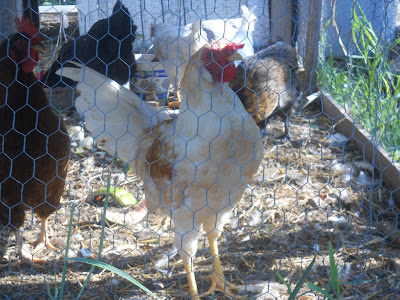
10. Meat chickens: Well, we didn’t get a bunch of meat chickens, but we did manage to increase the size of our layer flock. At one point, we had 13 chickens. The white hen Cookie succumbed to the heat (I think), and I took 5 of the new chickens to my parents’ when it became obvious that they were roosters. That puts us at 7 chickens. However, upon further review, one of the remaining pullets turned out to be a roo. At this point, he’s not very good at crowing, so I think I’m going keep him a little while longer until he’s big enough to butcher here. That will mean that I raised a meat chicken on the ‘Burbstead. Here’s to meeting the most unlikely of goals, even if it is by a technicality. Grade: A


My final "GPA" winds up being a 2.65 (C+). The two F's really hurt, but there's room improvement pretty much everywhere. By the end of the year, I'd like to be up to a B or better.

M

Sunday, April 10, 2011

Weekend Work


The temperatures this past weekend were unseasonably warm (the bank sign said 93 today). I took advantage of the opportunity to get some work knocked out around the house. The raised beds that wrap around the Southeast corner of the house didn't amount to much last year. I had some peppers, carrots, lettuce, and herbs in there. The only thing that came out of it were two tough-assed basil plants that defied my repeated attempts to dehydrate them. These are the beds that I want to plant all of my peppers in this year, so I needed to get them in order. I added dirt and compost to fill them up. For the record, a '92 Toyota Tercel with a gimpy 4 cylinder engine and a loose clutch will NOT haul 650 pounds of topsoil and a 254 pound driver at one time. I also improved the chook/rabbit/child defenses with some chicken wire. The beds with the trellis will house some early cucumbers. Now my pepper seedlings just need to get growing.

I also managed to clean and organize my shed - a job that was way overdue. In doing so, I drug out a bunch of pots that were hiding in a corner. I filled them with some potting soil that was laying around, and viola! Instant patio herb garden. More to come on this later.

Lastly, the Grand Rapids and Winter Density lettuce that I planted in February are really starting to come in, so they needed to be thinned. Thinning out a lettuce bed is a lot like weeding, except that you get to eat what you pull up. So tonight's supper featured the first salad from the summer garden. It was a nice finish to a very productive two days.

Thursday, January 20, 2011

Eating real food vs. the modern American palette

Pickles
(Click on the comic strip to see the whole thing)

This comic strip was in yesterday's St.Louis Post Dispatch. First let me say that it's a little disconcerting to find myself identifying so readily with a cartoon character who looks like Wilford Brimley. At any rate, I've had this exact same conversation with my own sons and my wife. My dad taps a bunch of maple trees down home, and for the past few years we've cooked up a bunch of real maple syrup in the spring. It's a bit thinner than fake syrup with a more complex flavor, but oh man is it good. I refuse to eat fake syrup on pancakes and such. If we're out of maple syrup, I'll use molasses or tomato preserve. My daughter always requests "Grandpa Doyle's syrup" on her pancakes. The boys and my wife, however, won't touch the stuff. Arguments about how store syrup is fake and HFCS is bad for you are of no avail. As far as they're concerned, fake syrup is the real syrup. That runny maple stuff might as well be creek water. On the one hand, it's hard to blame them for thinking that way. Until we started making maple syrup down home, I can only recall ever having the stuff once or twice when I was a little kid. We'd never buy it at the grocery store because real maple syrup is crazy expensive. So as far as most Americans' frame of reference is concerned, fake syrup actually is real syrup, becasuse it's all they know. In their brains and tastebuds, that's what syrup is supposed to taste like. It reminds me of a scene from the first Matrix movie:


The character Mouse goes on to speculate that perhaps the machines running the Matrix couldn't figure out what chicken tasted like, and so they made chicken taste like everything. One of the reasons that the Matrix is such a great movie is that it's an incredibly powerful allegory for modern industrial civilization. Most Americans now days have no idea what real food tastes like. For our entire lives, our expectations and preferences about food should look smell, feel, and taste have been shaped by corporations with little (if any) concern for our health and no understanding or interest in whether or not our food was real. In fact, food manufacturers prefer fake to real food in virtually every instance because the inputs for fake food are cheaper, and fake food has a shelf life that fits the industrial distribution model. Whole swaths of the grocery store are, as Michael Pollan puts it, little more than rearrangements of corn,soybeans, or both.

Given all of that, it's no wonder that our brains recoil a bit when we're presented with real food. "Syrup's not supposed to taste like that! These green beans are too crisp! Why are there bones in this chicken?" The irony, of course, is that we're rejecting the genuine as artifical, when it is our understanding of cullinary reality that is artificial.

What amazes me the most about this situation is that once your give up the fake food for a while, and once your body has acclimated itself to the sensations attendent to real food, the fake stuff tastes... fake. To me, HFCS based pancake syrup tastes acidic and chemically. Most canned vegetables are lacking in flavor and texture, and canned soups are overly salty. Don't get me wrong, we have all of those things in our house right now (the first as a conceit to my wife and sons, and the other two because my home canning operation is not yet as robust as I want it to be). I'm doing my best to eliminate processed foods from our diet, but it can be difficult at times given my family's corporately formulated expectations. Getting past that is largely a matter of continuing to provide them with wholesome, fresh, real food.

Yes son, maple syrup is supposed to taste like that. Our preferences and personal tastes, however, are simply all in our head.

Thursday, December 2, 2010

Butchering Day 2010


Last year on the day after Thanksgiving, my family revived a tradition that I remembered from my childhood: A family hog butchering. We hadn't done one in 20+ years, and it was a ton of fun. I was happy earlier this year when my dad talked about making plans to butcher again this year. We butchered 4 hogs this year instead of 3. It made for a full 1 1/2 days of work, even though we had a local processor kill and gut them for us. In spite of all that had to be done, it didn't feel like hard work, and it certainly wasn't drudgery. Instead, it was a day of telling jokes and old stories, giving each other a hard time, and doing meaningful work together. Und viel Deutsch gesprochen wurde. Don't get me wrong, it wasn't easy. Friday lasted from 6:30am to 9:30pm. By 10pm, we were tired. But it was gratifying to know what we had accomplished.

This year's work netted us the following: 8 hams, 8 huge slabs of bacon, 60 lbs of pork steaks, a tub of pork chops, 4 big packs of tenderloin, 175 lbs of pork sausage, a few ham shank roasts, 9 sticks of liverwurst, about 100 lbs of gritswurst, and 4 1/2 gallons of snow white lard. Not too shabby, if you ask me.

Herrick Kimball's awesome blog, The Deliberate Agrarian, had a bit about a webpage for the Virtz family who held an annual hog butchering. Mr.Kimball noted that all of the photos appeared to be circa the 70's or early 80's, and also that there were virtually no boys in the pictures, only grown men. When he contacted the family to see if they still butchered, they said that they hadn't done so since 1998. If the younger generation isn't taught how to do things and made a part of family traditions, then those traditions will die with the last people who learned them as children. I mentioned last year that I hoped this would become a regular event with my family. If we keep this up, instead of saying "I remember back when I was a kid..." my children will be able to say, "Butchering? We've done this ever since I was a kid..."

My mother wasn't her usual shutterbug self this year, so unfortunately there aren't the plethora of pictures like last time. I'll leave you with a picture of this morning's breakfast: 'Burbstead eggs, homemade bread with my brother's apple butter, and fresh gritswurst. Delicious!


Tuesday, November 16, 2010

My Grandma's Coffee Cake


Working in a school, there are often snacks or treats around at faculty meetings and in our small devotion groups. They are almost always either doughnuts or store bought snack cakes. The doughnuts vary in quality. I hate Krispy Kremes with a passion, but if we're lucky someone will stop by Donut Delight. They make the best doughnuts in St.Louis, especially apple fritters. I refuse to eat the Little Debbie cakes that kids insist on bringing to small group. I find a twisted sense of humor in reading the ingredient list and nutritional information to the kids while they're joyfully cramming swiss cake rolls in their mouths.

This past week I volunteered to bring food to our morning faculty meeting, and I decided to use the opportunity to introduce my coworkers to a long time tradition in my family - home made coffee cake. One of my earliest memories of my Grandma Lorenz is the baked goods that were always at her house. Cookies, rolls, bread, and especially coffee cake. I'm embarrassed to admit that this was the first time that I've ever used her recipe myself. The family cook book has a basic coffee cake dough recipe that can be topped with just about anything. One batch is enough for about 4 coffee cakes at 11x14 inches each. You can also use this dough to make her amazing pineapple cinnamon rolls (which I did). One coffee cake's worth of dough will make 8-10 rolls.

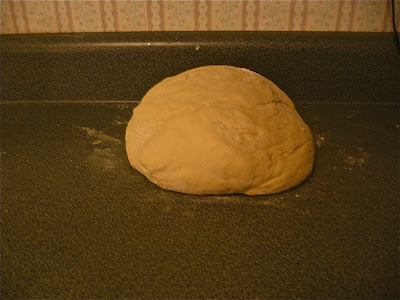
Once the dough has been kneaded, it needs to sit and rise for about an hour (or until it doubles in size). I dusted the counter with flour and covered the dough with a damp towel.

Once it has risen, you need to divide the dough and roll it out. I try to roll it to about 1/4" thickness. I placed it in greased baking pans and pressed around the edges to create a crust. You then let the dough rise again until it has doubled in thickness. This took about 45 minutes. If you are using a fruit topping, then you can put on the fruit and crumb topping after it is done with the second rise. If you are making Peanut Butter coffee cake, then you would poke a bunch of holes with a fork to prevent large air bubbles from forming.

At this point you can put the coffee cakes into the oven. The recipe is rather vague about baking time saying only, "bake until done". Mine were in there for about 30-35 minutes.

The finished product. Peach is on the left and Peanut Butter is on the right. I spread the peanut butter topping on the cake after it had cooled. Cut into 1.5" strips and demolish them with coffee or elderberry tea.

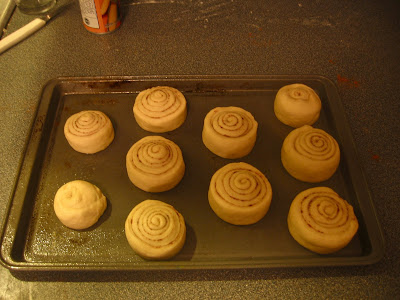
To make pineapple cinnamon rolls, roll the dough out the same way that you would for coffee cake. Brush some melted butter onto the dough and sprinkle liberally with cinnamon and sugar. Use a pizza cutter to cut the dough into 1.5" strips and roll them up. Pinch the end smooth.

Once the rolls are rolled up, they need to sit and rise for about 45 minutes. I scooted them closer together on the pan, and spooned the pineapple topping over them. Bake them for 35-45 minutes, depending on how thick they are.

It's hard to tell in the picture, but after the rolls come out of the oven and have cooled down, I poured a simple powdered sugar glaze over them. Delicious for breakfast, lunch, supper, snack, in the car, in the shower, middle of the night...

Wednesday, October 27, 2010

The other side of crazy...


57 days ago I noted that I was officially entering my crazy time of year. I haven't posted anything since then. To be honest, there hasn't been a whole lot going on around the 'burbstead during that time. Football season has a way of sucking up every last moment of spare time. In 2 short days, I'll be done. THANK GOD!

Fall planting wasn't quite as robust as I would have liked. I got in a bed of lettuce, chard, and spinach, but no peas, beans, or carrots. Next year I will do better. I picked up some blackberry plants for 50% off a couple of weeks ago. I got 6 of them for $15. They're going to be trellised along the fence down one side of the back yard.

I also found a food dehydrator on Craigslist for $15. I've run apples, bananas, and yellow pear tomatoes through it so far. It works like a champ, and it's so much easier than canning. I still want to build a solar dehydrator, but one thing at a time I suppose.

Tomorrow I will turn 31. Honest to god middle aged. Holy shit. Oh well. Tonight the Boy and I are going to see Hank III. It oughta be a damn good time!

Thursday, June 3, 2010

Eating Seasonally and the 1st Tomato of the year


The notion of eating seasonally if a pretty foreign concept to most people these days. Thanks to cheap oil, misguided agricultural policies, and a population increasingly disconnected from natural cycles in general, we have access to "fresh" produce 365 days a year. By shipping in fruits and vegetables from California and Florida, Central and South America, and various places in Asia, we aren't constrained by what plants will actually grow in our climate at any given point in the year. The truth is, that your average American grocery shopper has little, if any, understanding of what is growing locally when they go to collect their weekly vittles from the nearest Try 'n Save. This is bad for a variety of reasons that range from social to environmental to gustatory.
The environmental downside to shipping perishable produce around the world in refrigerated planes and trucks should be fairly obvious. It's often stated that we burn 10 calories of hydrocarbon energy for every 1 calorie of food we eat. Even if we ignore the ecological ramifications of that figure, the impact it will have on the cost of our food as we enter a future of fossil fuel depletion isn't good. Simply put: scarce and expensive oil and natural gas will equal scarce and expensive industrially produced food. Trade agreements like NAFTA and GATT victimize farmers in Mexico and elsewhere, while subsidy programs here in America encourage the over production of corn and soybeans and shut out small, diversified family farmers.
As for your taste buds, just ask anyone who has ever eaten a fresh, ripe, heirloom tomato how it stacks up against a hothouse tomato shipped from halfway around the world in February. There is no comparison. In the words of Michael Pollan, the February tomato is a "notional tomato". It looks more or less like a tomato, but it's lacking all of the tastes, smells, and textures of a real tomato. It's a tomato with no soul. And yet we settle for it because we have shifted the responsibility for providing ourselves with food to industrial producers and grocery chains. We let them dictate what we get to eat.
Tomatoes are an easy place to start eating locally and seasonally because 1). Out of season, grocery store tomatoes suck so bad, and 2). Growing tomatoes at home is virtually idiot proof. As a result, I haven't purchased a tomato in over two years (jesus, I sound like a recovering addict). This means that from late November/early December through early July-ish, I don't eat tomatoes! I know, that sounds crazy huh? I can up a bunch of sauces and salsas and tomato preserve, but no fresh tomatoes. That's why I was so excited to see the following green, marble-sized lump on my Silvery Fir Tree tomato plant today.

It's a long way from eating, but it's a sign of what's to come, and it's out a lot earlier this year than in years before. Silvery Fir Tree is (I believe) a Russian variety that I first read about in Barbara Kingsolver's "Animal, Vegetable, Miracle". They have a listed harvest time of 58 days from transplant, as opposed to 80-90 days for most other varieties. I got my seeds from Seed Saver's Exchange. I'm growing a total of 9 kinds of tomato this year, but Silvery Fir Tree was my pick for first fruit out of the box. Next year we'll try a row cover/hoop house combo, and see if we can't get them producing before June.
Would it be easier to simply go to the store and buy a few tomatoes in May? Sure, but as far as I'm concerned that's not an option. Besides, doing it yourself is too much fun.

Tuesday, June 1, 2010

'Burbstead Supper

As Spring gives way to Summer, the garden is beginning to produce more food, a little at a time. As I've said before, the more you get into the habit of eating out of your own backyard, the more routine it becomes. Let's take a tour of a recent supper we had, to see just how easy it can be (cue the upbeat, elevator music intro)

We begin in the garden, where the Fordhook chard and Winter Density lettuce are looking good. The Sugar Snap peas are almost done, but the Green Arrow shell peas are just coming in. *By the way, if you're looking for a good shell pea to grow, I can't recommend the Green Arrow highly enough. It's super sweet, and puts out tons of long pods that average 9-12 big peas each. Good stuff* The girls generally pump out 1 or 2 eggs a day, so we had the better part of a dozen.


Winter Density Lettuce

Detroit Red Beets and Fordhook Chard hiding in the back

The fixin's for supper

All of that was cleaned, chopped, mixed, cooked, and, with a little help from the grocery store (hey, we're not the Dervaes family or anything), became a delicious meal of beef and chard quiche, peas and carrots, and a salad. It was simple, nutritious, and 75-80% came from right outside our back door...not too shabby for a Sunday night.


Tuesday, May 4, 2010

'Burbstead Breakfast


Eating fresh, local food can seem like a hassle if you're not used to doing it. Convenience is the primary focus of most Americans' eating habits. We're not used to thinking about where our food comes from, and most people don't really care so long as it's easy to fix. If your cooking routine is typically placing a frozen meal in either the oven or microwave and walking off, fixing food from scratch can look like a real pain in the ass. "Wait you want me to grow the food myself? Forget about it! "

The funny thing about eating locally is, once you get started, it keeps getting easier. Or rather, you adopt new habits; so that what was once going out of your way is now the new normal. You think about your food choices more than you used to, but you begin doing it unconsciously. It's a process that you're never finished with, but it's enjoyable and worthwhile...and each step makes the next one easier to take. My breakfast this morning is a good example. Without trying, I made a meal that (excluding the ingredients for the bread) came entirely from the 'Burbstead: fresh eggs, homemade bread, and tomato preserve from last year's garden. Fresh, local, and as Mr.Food used to say, "Oooh it's so good!"

'Burbstead Breakfast

Wednesday, April 7, 2010

Flashback: Hog Butchering 2009


The Crew: Buster, Jon, Uncle Rick, Me, Tater Tot, Dad, Uncle Dean, Wingnut, Alex, Jackson, Erik, Rob *DT is missing

Last Fall, on the day after Thanksgiving, while most Americans were participating in the vulgar ritual of conspicuous consumption known as "Black Friday", I had the pleasure of helping my family to butcher 3 hogs that my dad had been fattening up since the previous Spring. It was a lot of work, but it didn't seem hard working with brothers and cousins and uncles. I vaguely remembered butchering from when I was little, but that was almost 25 years ago. It was fun and gratifying to be involved in the process as an adult.

By the end of the second day, we had 6 hams, slabs of bacon, ribs, shoulders, a tub of chops, mountains of sausage, gritswurst, sackwurst, and a bucket of rendered lard. Everyone got to take some home, and there was a ton in my parents chest freezer. My uncle Dean smoked one of the shoulders for our Christmas get together. It was phenomenal. We've have the bacon a few times. It was good, fattier than most store bacon, but good none-the-less. My mom baked one of the hams for Easter. It was awesome. The sausage has made its way into breakfast and pizzas on multiple occasions. The lard makes the most amazing (if dietarily incorrect) fried chicken and pie crust. Theribs are going to be barbequed when school is over. As for Gritswurst, if you don't know what it is, then you haven't lived a full life.

All of the delicious food pales in comparison, though, to the great memories and sense of accomplishment that came from doing honest, meaningful work with friends and relatives. My children, who witnessed the entire process from start to finish, now have an understanding and appreciation for where their food comes from that virtually none of their peers do. Our culture's disconnect from the source of our sustenance is one of a handful of issues that form the root of most of the problems we face as a society. Giving my kids the chance to experience this sort of thing connects them to our family's history, and gives them the grounding they will need to thrive in a future where we will have a much more visceral connection to our food. I sincerely hope that butcher day (and things like it) be come a more regular feature of our family's life.

One last treat before the excitement begins...


The kettles were cooking early in the morning


The hogs were hung from a tree for skinning


Rob is trimming out a slab of ribs


The cuts of meat awaiting packaging


DT prepping a ham for wrapping


Yours truly sewing up a ham so it can hang and cure


Some of the fruits of our labor